

Diferenças entre placas de quartzo branco puro e placas de quartzo de outras cores
Release time: 2026-02-02
In modern home and commercial design, quartz slabs are widely favored for their excellent durability and aesthetics. Among them, pure white quartz slabs, with their simple and elegant characteristics, have become an ideal choice for many. This article will explore the main differences between pure white quartz slabs and other colored quartz slabs, including their functions, visual effects, and applications in design. Through comparison, we can better understand the advantages and disadvantages of different colored quartz slabs, thus making a more informed choice to meet our own needs and aesthetic preferences.
Índice
Main Functions of Pure White Quartz Slabs
The main function of pure white quartz slabs is to provide a sturdy and beautiful surface suitable for a variety of uses. First, it is often used in high-frequency areas such as kitchen countertops, bathroom vanities, dining tables, and office desks, possessing good wear resistance and stain resistance. Second, the non-porous nature of pure white quartz slabs makes them less prone to bacterial growth, thus effectively maintaining cleanliness and hygiene in environments such as kitchens and bathrooms. Furthermore, due to the stability of its material, pure white quartz slabs can also withstand high temperatures, reducing the risk of heat damage.
The Key Aesthetic Functions of Pure White Quartz Slabs
Pure white quartz slabs possess unique aesthetic functions. Their pristine white surface adds brightness and transparency to any space, making the entire environment appear more open and refreshing. Simultaneously, pure white is a timeless classic, perfectly complementing modern, minimalist, and traditional interior design styles. It can also serve as a backdrop, allowing other decorative elements to stand out and creating a rich visual effect. Furthermore, pure white quartz slabs reflect light, increasing the brightness of a space and thus enhancing the overall atmosphere.
The Difference Between Pure White Quartz Slabs and Other Colored Quartz Slabs
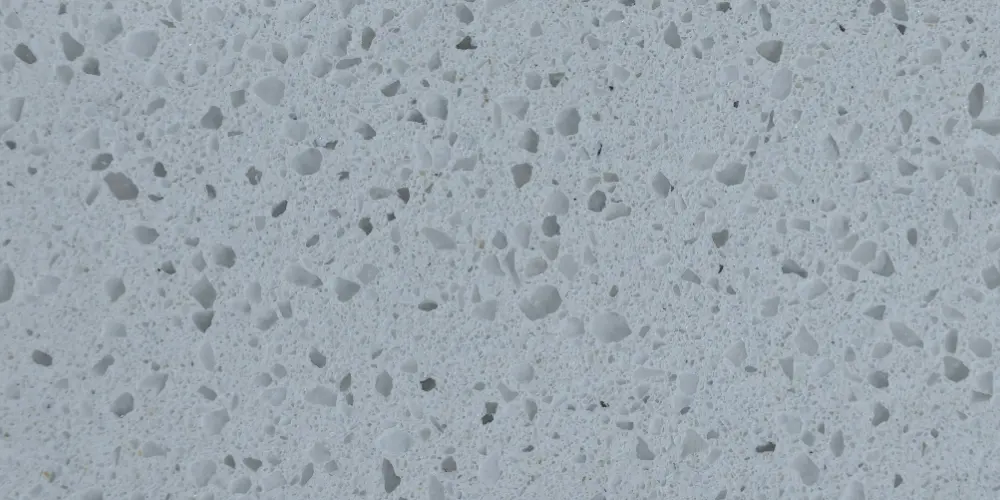
Compared to other colored quartz slabs, pure white quartz countertop have several significant differences. First, in terms of color and texture, pure white quartz slabs typically present a uniform, smooth surface, lacking the patterns and color variations found in other colored quartz slabs. This makes pure white quartz slabs visually cleaner and simpler, suitable for designs pursuing a minimalist style. Other colored quartz slabs, such as black, gray, or patterned varieties, often exhibit stronger individuality and decorative effects. Secondly, pure white quartz slabs offer greater flexibility in design. Whether combined with wood, metal, or other materials, pure white quartz slabs easily integrate and enhance the overall design. Other colored quartz slabs, however, may limit design flexibility in certain situations, especially when paired with specific color schemes, requiring more careful consideration.
Finally, in terms of maintenance, pure white quartz slabs are relatively easy to clean because their smooth surface makes it difficult for dirt and stains to adhere. Usually, only a mild detergent is needed for cleaning. Some darker or textured quartz slabs may show water stains or dirt more easily, requiring more regular and meticulous maintenance.
Pure white quartz slabs differ significantly from other colored quartz slabs in terms of visual effect, design flexibility, and maintenance requirements. With its classic appearance and easy-to-clean properties, pure white quartz slabs are suitable for minimalist and fresh design styles. Other colored quartz slabs offer a wider range of personalized choices, showcasing unique decorative effects. When choosing quartz slabs, consumers should make a decision that best suits their design needs, spatial style, and usage habits.